Get to know your Mahjong tiles.
Start with the picture, then the number. Learn three numbered suits and seven honors, and most of the tiles will soon feel familiar.
Three suits, numbered one to nine
Characters, circles and bamboo are separate suits. A 4 circles and a 4 bamboo share a number, but they are different tiles. Most sets have four copies of each tile type.
A sequence uses three consecutive numbers from the same suit, such as 3–4–5 circles. Numbers do not wrap around: 8–9–1 is not a sequence. A triplet uses three identical tiles.
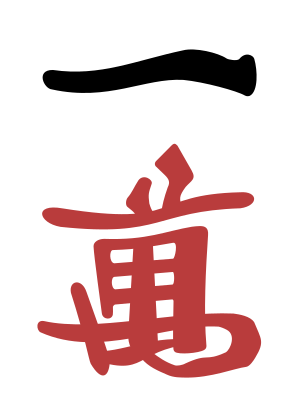
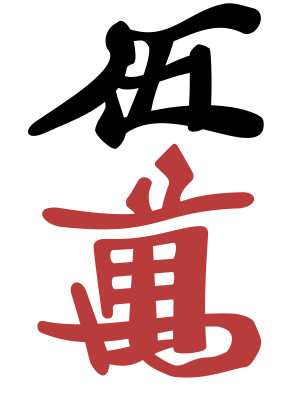
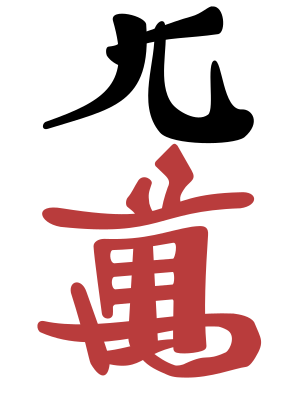
Characters: 1, 5, 9

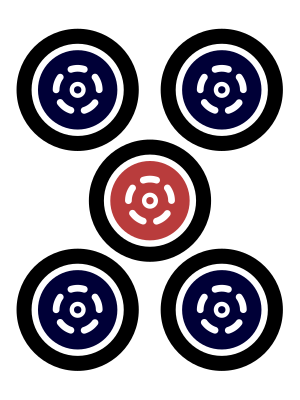
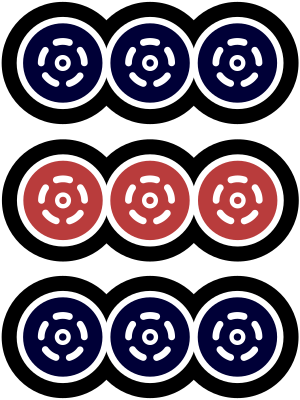
Circles: 1, 5, 9


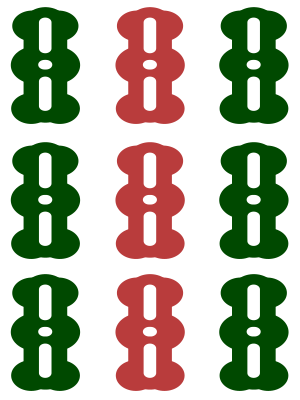
Bamboo: 1, 5, 9
The bird is one bamboo
The 1 bamboo often shows a bird instead of a single bamboo stick. It still belongs to the bamboo suit and can form a 1–2–3 sequence. Characters tiles use Chinese numerals; the small corner guides help you read them while learning.
Seven circles has three circles on a diagonal above a block of four. The arrangement and number identify the tile. The blue and red decorations within a circles tile do not make it a red five.

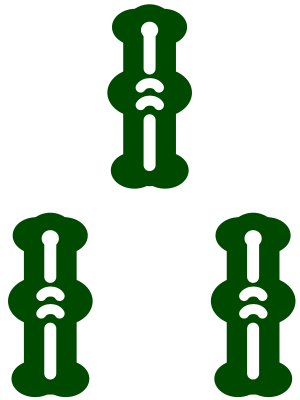
A bamboo sequence
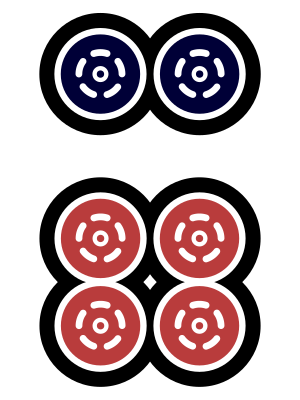


Six, seven and eight circles
Four winds and three dragons
East, South, West and North are the four wind tiles. White, Green and Red are the three dragons. Together, these seven tile types are called honors.
Honors can form pairs, triplets and four-of-a-kind groups. They cannot form sequences: East–South–West is not a group. A wind tile in your hand is separate from the seat wind assigned to your position at the table.
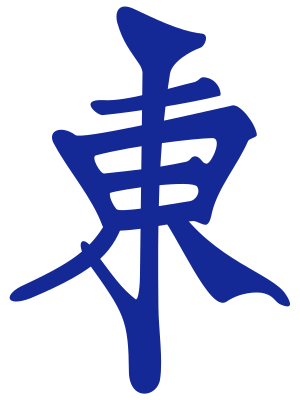



East, South, West, North

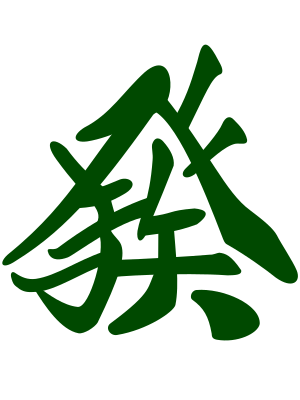

White, Green, Red
A red five is still a five
New four-player Riichi games on Mahjong Planet use one red five in each suit by default. Each replaces an ordinary five; it is not an extra tile. A red five works in sequences and matching groups just like an ordinary five.
Red fives add bonus value to a winning Riichi hand, but do not supply the yaku needed to win. The red circles decorating an ordinary circles tile are simply part of its artwork. Three-player Riichi and the other variants use their own fixed presets.
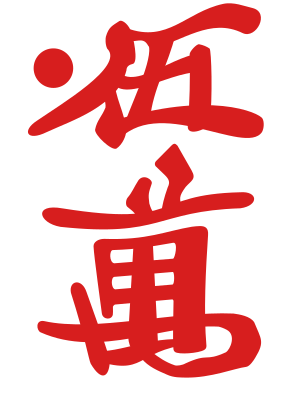
Ordinary and red 5 characters

Ordinary and red 5 circles

Ordinary and red 5 bamboo
Your variant decides which tiles are in play
Four-player Riichi uses 136 tiles: the three suits and seven honors, with four copies of each. Our three-player Riichi removes 2 through 8 characters, leaving 108 tiles. North has a special extraction action in that preset.
Hong Kong and Chinese Classical use 144 tiles, including flowers and seasons. Those bonus tiles are revealed and replaced instead of being kept as ordinary hand tiles. Sichuan uses 108 suited tiles and no winds or dragons.
Start with the tile names, then open the rules for your chosen variant. A familiar-looking hand can have different winning requirements at another table.