 Mahjong PlanetAll stories
Our Riichi scoring calculator is here. What is your hand worth?
· Mahjong Planet
Build a hand, find its yaku, and see who pays what. Try Mahjong Planet’s free Riichi scoring calculator with a step-by-step example. No account needed.
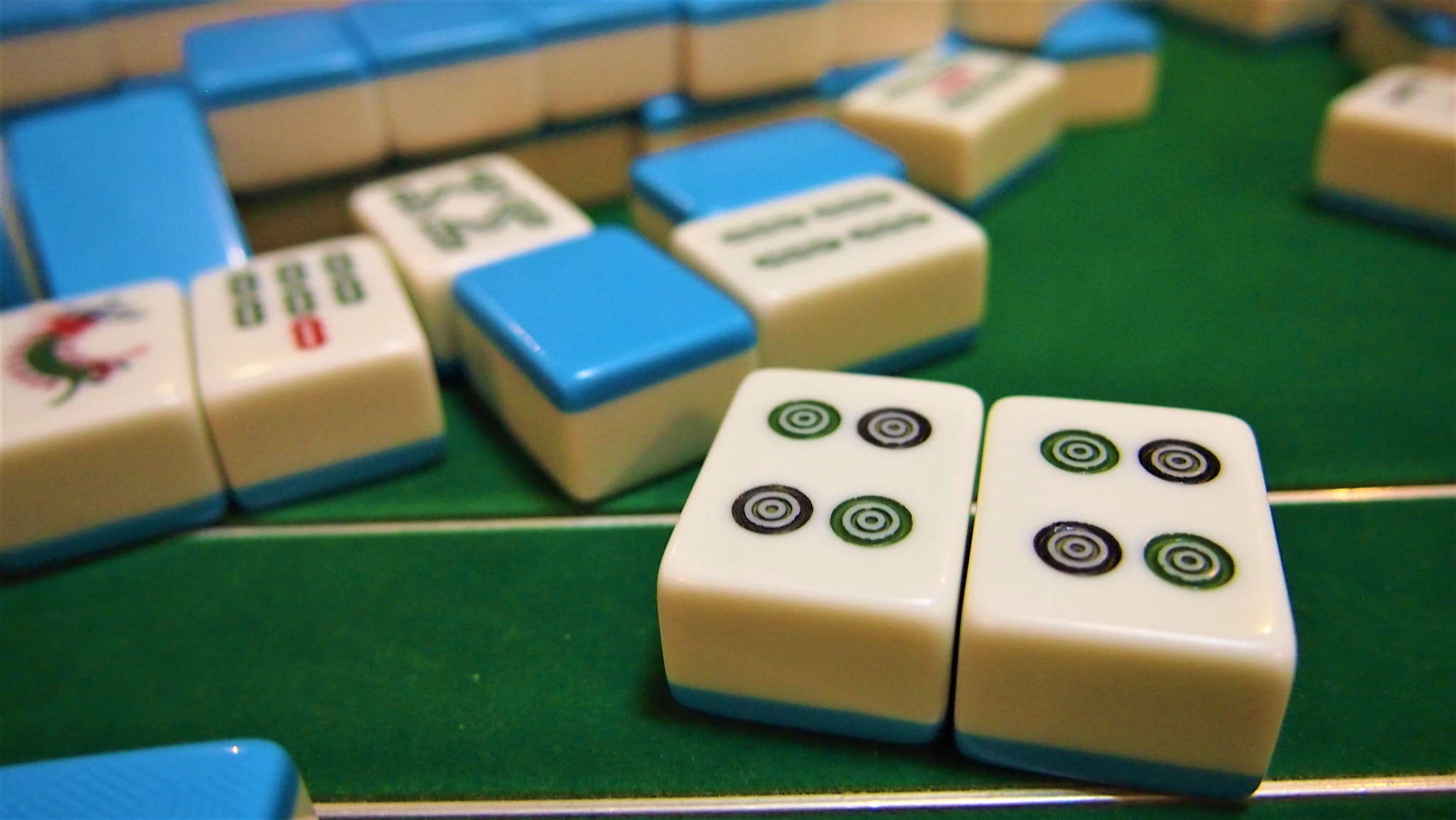
Photo: Lian Jiayuan / Wikimedia Commons · CC0 public domain
.jpeg)
A winning hand, explained.
You have four groups and a pair. You know you can win. But how many points is that hand worth—and who pays them? Riichi scoring brings together yaku, han, fu, the winning tile and your seat at the table. It is a lot to keep in your head when you are learning.
Our Riichi scoring calculator is now available under Analyze in the sidebar. Choose your tiles, set the winning conditions, and see the hand’s yaku, han, fu and payments. It is free and unlimited, with no account needed.
You can use it to check a hand you have written down, explore a scoring question, or change one detail and see what happens. Here is a quick way to get started.
1. Start with an example.
Open the calculator and click Try an example. It fills in a closed hand and shows the result straight away: 3 han, 30 fu, with 3,900 points paid by the discarder.
The example puts you in the South seat during an East round, winning by ron after declaring riichi. Its three yaku are Riichi, Pinfu and All simples, each worth one han. There are no dora indicators, honba or riichi sticks added to this example.
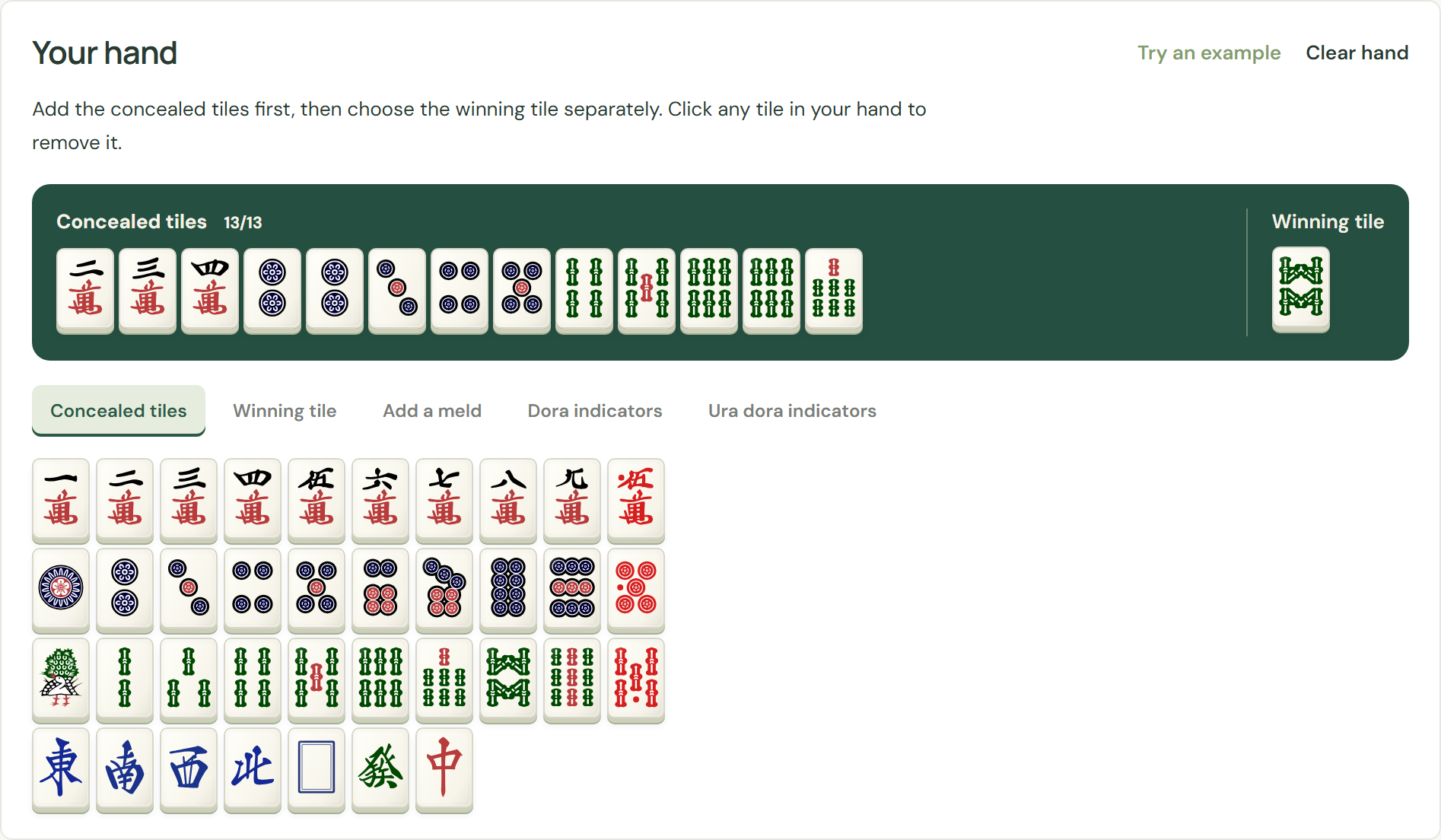
Notice that the winning 8 bamboo sits separately from the other 13 tiles. That matters: the tile you win on helps determine the wait and the score.
2. Change how you win.
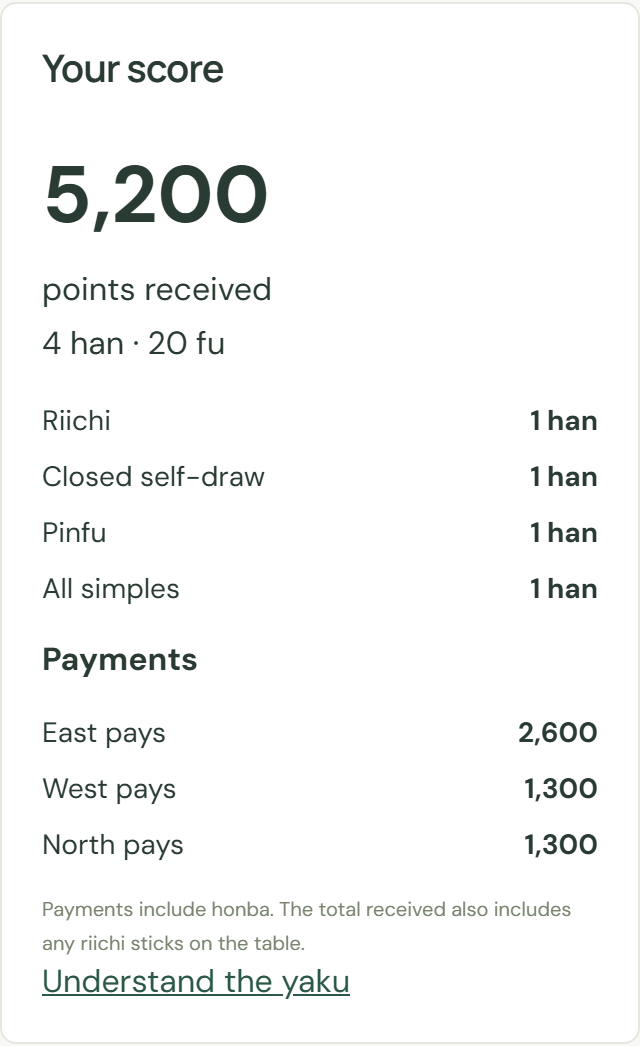
Keep the example hand and change Win by from Ron (discard) to Tsumo (self-draw). Click Calculate score again. The result becomes 4 han and 20 fu, for 5,200 points in total: East pays 2,600, while West and North each pay 1,300.
The extra han comes from Closed self-draw. The fu changes too, because a pinfu hand won by self-draw uses 20 fu. This is a useful little experiment: the same tiles can produce a different score when the winning conditions change.
3. Build your own hand.
Click Clear hand, then use the tile picker to enter your concealed tiles. For a hand without declared melds, add 13 tiles and choose the winning tile separately. Click a tile in your hand to remove it if you make a mistake.
For a called sequence, triplet or kan, use Add a meld. Each declared meld replaces three concealed tiles in the input—even a kan, which has four tiles. A concealed kan has its own checkbox. The concealed-tile counter shows how many tiles are still needed.
Set your seat wind, round wind and whether you won by ron or tsumo. Add riichi or other conditions only if they actually applied to the hand. Extra conditions & counters contains the honba and riichi-stick fields.
Under Dora indicators, enter the tile shown on the wall. For example, a 4 circles indicator makes 5 circles the dora. Red fives are counted automatically when you choose them in the hand. Ura dora indicators become available when riichi is selected.
What the result can tell you.
The result lists the scoring patterns and bonuses, han and fu for ordinary hands, and the payments. Honba is included in the payments; any riichi sticks on the table are included in the winner’s total. If the hand is incomplete or has no yaku, the calculator asks you to check it. Dora alone does not provide a yaku.
This is a four-player Riichi calculator using the rules listed beneath the tool. It scores the tiles and conditions you enter; it cannot check furiten or reconstruct earlier discards. First-turn wins and responsibility payments are not supported.
Start with the example, change one thing, and calculate again. Seeing the payment change is a handy way to make Riichi scoring feel less mysterious.